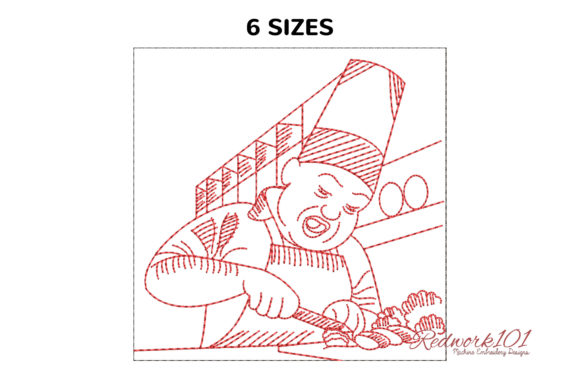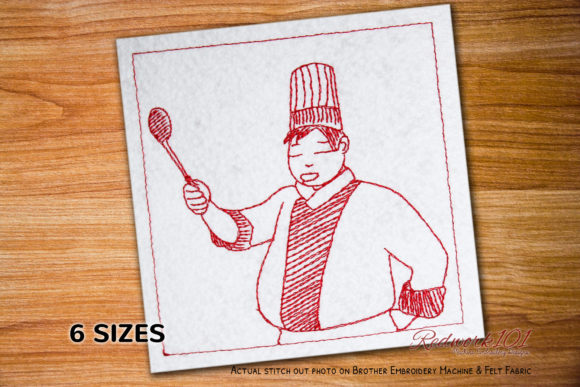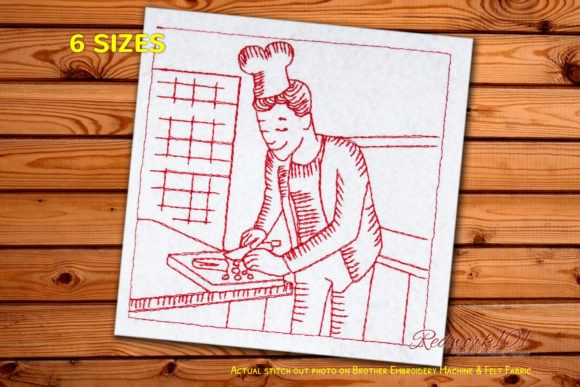
A Cook in the Kitchen Redwork Design Review
First Impressions and Visual Personality
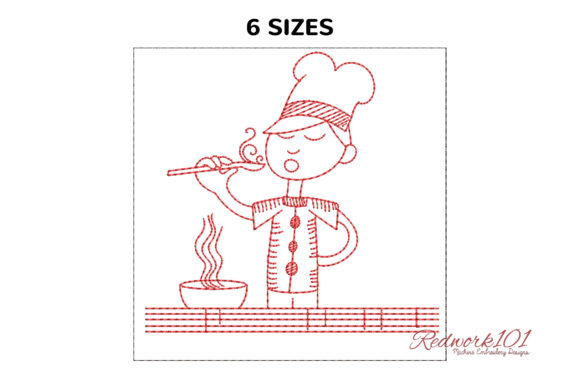
Upon first glance, A Cook in the Kitchen Redwork Design exudes a charming and inviting aesthetic. The design feels both rustic and playful, making it an excellent choice for businesses that want to convey a warm, welcoming atmosphere. This design is particularly well-suited for small cafés, bakeries, and handmade shops where a personal, homey touch is essential.
Performance in Real Business Use
A Cook in the Kitchen Redwork Design is versatile and can be used across a variety of merchandise and branding needs. Here’s how it performs in different applications:
- Embroidered Patches: The design works beautifully as a patch, adding a unique and personalized touch to uniforms, aprons, and tote bags. Its simplicity makes it easy to scale down for smaller patches without losing detail.
- Staff Uniforms: As a chest logo or sleeve detail, it adds a professional yet friendly element to staff attire. It’s perfect for apron embroidery, ensuring that your team looks cohesive and well-branded.
- Cap Embroidery: The design can be adapted for cap fronts, providing a stylish and recognizable element for your brand. However, care should be taken with the stitch density to ensure it doesn’t become too bulky on curved surfaces.
- Tote Bag Design: On tote bags, the design stands out, making it a great option for customer gifts or event merch. The redwork style adds a classic, timeless feel that enhances the overall appeal of the bag.
Considerations for Specific Uses
While A Cook in the Kitchen Redwork Design is generally versatile, there are specific areas where it should be used with caution:
- Small Patch Sizes: Test the design at a small patch size to ensure all details are clear and visible. Adjustments may be necessary to maintain clarity.
- Curved Surfaces: When using the design on caps or other curved surfaces, consider the stitch density to prevent distortion and bulkiness.
- Textured Fabric: The design may require adjustments on textured fabrics to ensure the lines remain crisp and the overall look is clean.
- Dark Uniforms: Ensure there is sufficient contrast between the thread colors and the fabric, especially on dark backgrounds, to make the design stand out.
- Frequent Washing: For items that need frequent washing, such as aprons and work shirts, use a high-quality stabilizer to maintain the design's integrity over time.
Impact on Brand Identity and Customer Engagement
A Cook in the Kitchen Redwork Design significantly enhances brand identity by adding a manual, artisanal touch. This design helps build customer trust and recognition, as it conveys a sense of quality and attention to detail. The visual consistency provided by this design across various merchandise and branding elements, such as embroidered patches, aprons, and tote bags, reinforces a strong, cohesive brand image.
The design’s playful and rustic charm also increases product value and buyer engagement. Customers are more likely to connect with and remember a brand that presents itself in a relatable and visually appealing way. Whether used for custom apparel, product packaging accents, or boutique merchandise, A Cook in the Kitchen Redwork Design helps create a memorable and engaging experience.
Practical Embroidery Designer Notes
Before using A Cook in the Kitchen Redwork Design for your business, here are some practical tips to ensure the best results:
- Test in Black and White: Start by testing the design in black and white to assess its clarity and balance. This step is crucial for ensuring the design works well before moving to color.
- Check Small Patch Size: Verify that the design maintains its detail and clarity at smaller sizes. Adjustments may be needed for optimal visibility.
- Thread Color Contrast: Choose thread colors that provide good contrast against the fabric, especially on dark backgrounds. This ensures the design stands out and is easily recognizable.
- Inspect Spacing and Alignment: Carefully check the spacing and alignment of the design elements, especially if the outer box is part of the design. Proper spacing is key to a professional finish.
- Confirm Hoop Size: Ensure the hoop size is appropriate for the design, especially for larger or more detailed elements. This prevents distortion and ensures a clean, even stitch.
- Test on Real Fabric: Always test the design on the actual fabric you plan to use. This helps identify any potential issues with texture, stretch, or stability.
- Use Proper Stabilizer: Select the right stabilizer for the fabric and design. This is crucial for maintaining the design’s integrity, especially on items that will be washed frequently.
- Create a Mockup for Client Approval: Before finalizing the design, create a printable mockup to show clients. This step ensures that the design meets their expectations and allows for any necessary adjustments.
- Compare with Other Design Assets: Place the design beside other branding elements to ensure visual consistency. This helps maintain a cohesive and professional brand image.
- Confirm Commercial Licensing: Before using the design for commercial purposes, confirm that you have the appropriate licensing. This is important to avoid any legal issues and to ensure you can use the design for your intended purpose.
By following these guidelines, you can effectively incorporate A Cook in the Kitchen Redwork Design into your small business merchandise and branded patches, enhancing your brand’s visual identity and customer engagement.