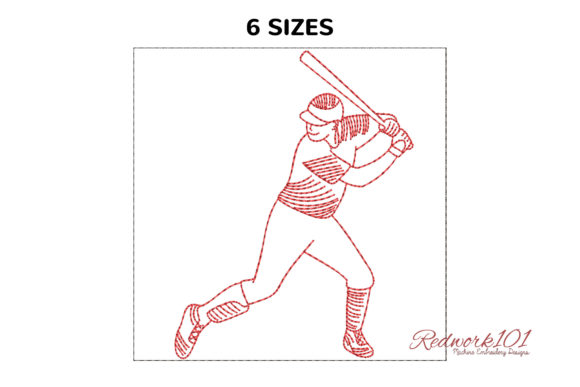
Baseball Player Swinging Redwork
A Designer’s First Look: Bold, Nostalgic, and Ready for Real Fabric
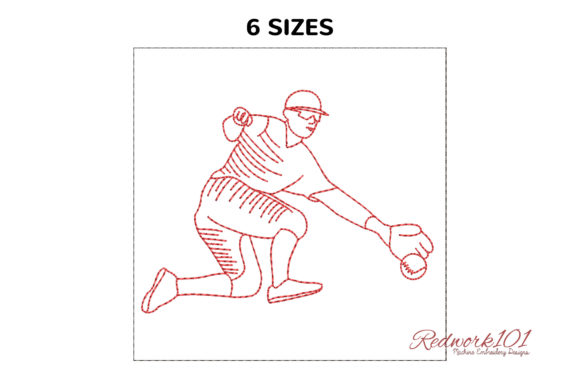
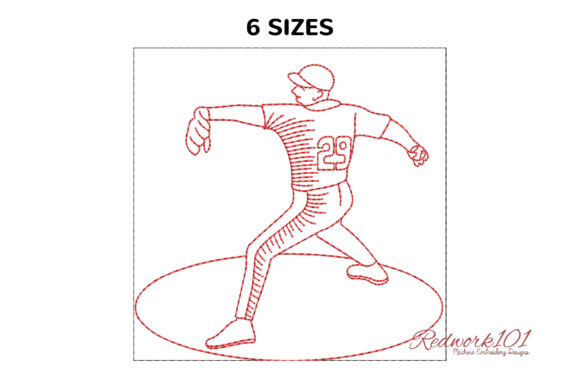
When I opened Basball Player Swinging Redwork, my first thought wasn’t “cute” or “trendy”—it was “this feels like a real moment.” The player’s stance is confident but unposed, the swing mid-motion, the redwork style giving it that hand-stitched warmth without sacrificing clarity. It’s not overly detailed—no tiny facial features or complex shading—but it doesn’t need to be. This is storytelling in thread: a snapshot of summer, tradition, and quiet pride. As an embroidery designer who’s stitched hundreds of sports-themed pieces for small shops and custom orders, I immediately pictured it on a natural canvas tote bag—simple, sturdy, and quietly meaningful.
Where It Shines (and Where It Needs Care)
Basball Player Swinging Redwork works beautifully on medium-weight fabrics where stitch definition matters: cotton twill for aprons, brushed fleece for baby sweatshirts, or linen-cotton blends for kitchen towels. Its clean lines and open negative space make it forgiving on slightly textured surfaces—unlike dense fill-stitch designs that blur on nubby weaves. I tested a mockup on a lightweight unisex tee and found the redwork’s running and satin stitches held up well with light stabilizer, especially around the bat arc and shoulder line.
But here’s what I’d flag for fellow designers and Etsy sellers: avoid using Basball Player Swinging Redwork on highly stretchy knits (like jersey) without cutaway stabilizer and careful hooping—it’s got directional movement, and stretching mid-stitch can distort the swing’s angle. Also, skip it on very dark fabric unless you’re willing to test thread contrast thoroughly; redwork relies on tonal subtlety, and black-on-navy or burgundy-on-charcoal can mute its charm. And while the optional outer box adds framing polish, remember: if your client wants minimalism—or you’re stitching on curved surfaces like caps—the box may complicate registration. Skip it cleanly when needed.
Real-World Fit: From Boutique Shelf to Personalized Gift
Last month, I used Basball Player Swinging Redwork as the centerpiece for a set of nursery pillow covers for a local boutique. We chose soft ivory linen, red thread (DMC 321), and omitted the outer box. The result? Warm, gender-neutral, and instantly recognizable—not “sports logo,” but “a child’s first love of the game.” Customers responded to the handmade sincerity, not just the theme. That’s the quiet strength of this design: it invites connection, not just recognition.
It’s equally effective on commercial embroidery projects—think custom team warm-up sweatshirts for youth leagues or embroidered patches for Little League coaches’ jackets. Because it avoids clip-art stiffness, it reads as intentional, not generic. For craft fair vendors or Etsy sellers, that translates directly to perceived value: buyers pay more for designs that feel curated, not copied.
What Makes It Stand Out in a Crowded Sports Niche
- Redwork authenticity: Not digitized realism—just confident, rhythmic stitches that honor traditional hand embroidery.
- No tiny traps: No micro-details that vanish at 3" wide or snag on toddler clothing seams.
- Flexible scale: Works at 2.5" for baby onesies and expands cleanly to 4.5" for tote bags without losing legibility.
- Brand-friendly neutrality: No team colors, logos, or uniforms—so it fits any shop’s aesthetic, from rustic farmhouse to modern minimalist.
Design Notes Every Embroiderer Should Check Before Stitching
Before adding Basball Player Swinging Redwork to your next project—or listing it as part of your digital embroidery file collection—run through these practical checks:
- Test on scrap fabric matching your final product (e.g., terry cloth for towels, fleece for blankets).
- Compare thread colors on both light and dark backgrounds—even subtle shifts in red tone change the mood.
- Review stitch density: redwork tends to use lighter fills, but confirm no areas risk puckering on delicate fabrics.
- Verify hoop size compatibility—especially if stitching on curved items like caps or sleeves.
- Inspect corners and curves: does the bat handle or glove edge stitch cleanly, or does it feather unpredictably?
- Check black-and-white mockups: if it reads clearly without color, it’ll hold up across fabric types and lighting conditions.
- Confirm licensing terms before selling finished products or bundling it into digital embroidery bundles—this affects Etsy sellers and craft business owners most directly.
Final Thought: A Design That Earns Its Place
Basball Player Swinging Redwork isn’t flashy. It won’t dominate a social media feed with glitter or motion effects. But it earns trust—the kind that makes a customer choose your handmade product over mass-produced alternatives. It works because it’s honest: simple enough for beginners, expressive enough for seasoned designers, and timeless enough to stay relevant beyond seasonal trends. Whether you’re stitching a personalized gift for a coach’s retirement, building a cohesive line of sports-themed nursery decor, or expanding your digital embroidery file catalog for Etsy, this design delivers quiet confidence—not noise. Just make sure you treat it like the thoughtful asset it is: test, refine, and let the redwork speak for itself.