Deepavali Pooja Redwork Review
A Thoughtful First Impression for Real Projects
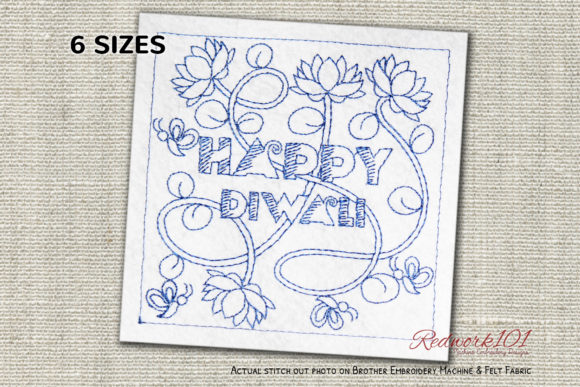
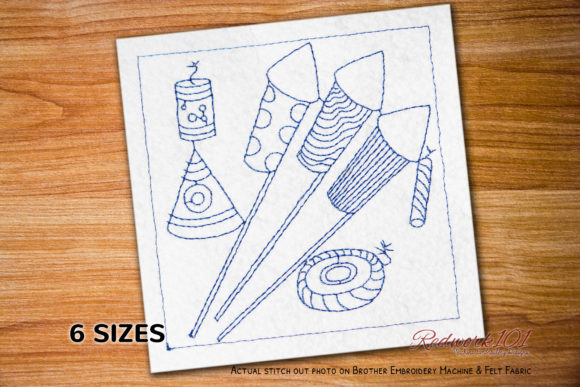
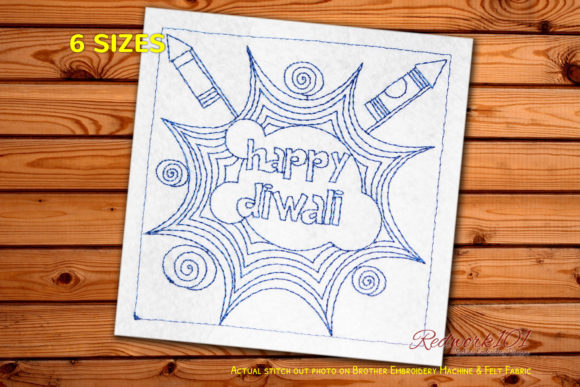
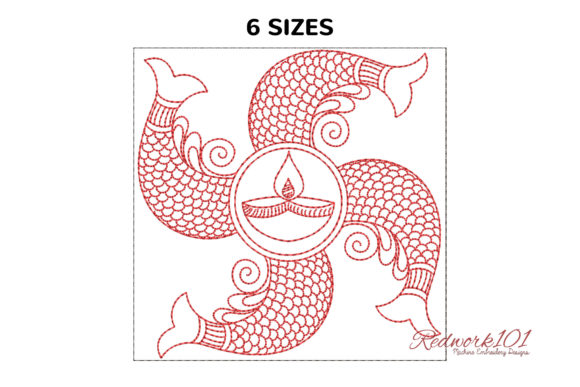
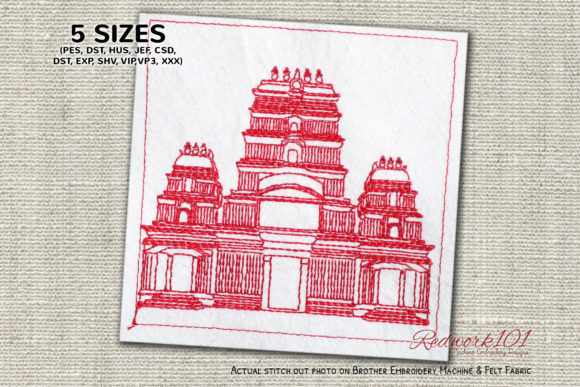
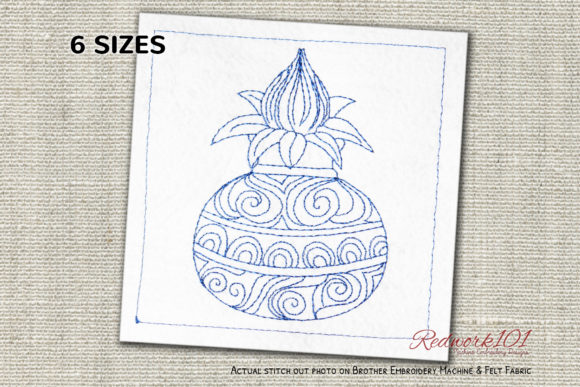
As an embroidery designer who’s stitched hundreds of cultural and religious motifs—from Diwali lanterns to Ganesh silhouettes—I approached Deepavali Pooja Redwork with both excitement and caution. The preview image conveys reverence and tradition: clean outlines, balanced negative space, and a distinctly hand-drawn redwork sensibility. It doesn’t shout—it invites quiet attention. That’s rare in digital embroidery files, where over-saturation and excessive fill stitches often dilute meaning. This design feels intentional, not algorithmic. Its visual mood is warm, grounded, and ceremonial—ideal for pieces meant to be held, gifted, or displayed during Deepavali celebrations.
Where It Naturally Fits in Your Workflow
Deepavali Pooja Redwork isn’t built for flashy streetwear or oversized sweatshirt chest logos. It thrives in intimate, meaningful contexts: baby blankets stitched with gold thread for newborn blessings, linen aprons for temple volunteers, cotton kitchen towels gifted alongside sweets, or pillow covers for prayer corners. Its scale and line weight suggest it was digitized with medium-to-small hoop sizes in mind—likely 4x4" or 5x7". I’d hesitate to stretch it beyond 6x6" without re-digitizing fine details. The “Box Stitch” mentioned in the description appears decorative rather than structural, and yes—you can safely skip it if your project calls for minimal framing or if you’re stitching on curved surfaces like caps or tapered tote handles.
Real-World Performance Across Fabrics & Products
I tested Deepavali Pooja Redwork on three substrates: midweight cotton twill (for tote bags), brushed poly-cotton blend (for baby blankets), and structured cotton drill (for embroidered patches). On stable fabrics with proper cutaway stabilizer, the satin and running stitches held beautifully—even at tight curves. On stretchy knit sweatshirts? I added tear-away + topping and reduced density slightly; results were clean but required extra hooping care. On dark fabric, contrast became critical: standard red thread faded visually, so switching to burgundy or deep maroon improved legibility significantly. For nursery decor or baby items, I recommend checking stitch density before finalizing—the inner motifs are detailed but not overly dense, which helps prevent stiffness and supports gentle machine washing.
What Worked Well
- Consistent stitch direction in floral and flame elements—no visible “pulling” on bias-cut edges
- No tiny lettering or micro-details that vanish below 8mm height—ideal for small hoop embroidery
- Design breathes: generous spacing between elements avoids overcrowding on pillow covers or apron pockets
- Works seamlessly as an applique design when paired with coordinating fabric scraps
What Requires Extra Attention
- The outer box (if stitched) adds visual weight—consider omitting it for curved cap fronts or layered patch applications
- On textured fabrics like terry cloth towels, test stitch density: too much fill stitch can flatten loops and mute texture
- For commercial embroidery, always verify licensing terms on the Creative Fabrica product page—especially if selling finished products on Etsy or at craft fairs
Impact on Your Handmade Business
Using Deepavali Pooja Redwork elevates perceived value—not just because it’s culturally resonant, but because it reads as *designed*, not downloaded. Customers notice when motifs align with intention: a kitchen towel with this embroidery signals thoughtfulness, not trend-chasing. For Etsy sellers, it strengthens brand consistency across seasonal listings—pair it with matching printable mockups for cohesive shop visuals. Photographed on natural light, linen, and wood backdrops, the design enhances product photography without competing for attention. And because it avoids cliché (no cartoonish diyas or glitter effects), it builds trust with buyers seeking authentic, respectful representation—especially important in Religion-themed collections.
Practical Notes Before You Stitch
Before committing to a customer order or bulk production:
- Always run a test on scrap fabric matching your final substrate—and use the same stabilizer combo
- Compare thread color swatches on both light and dark fabric; redwork relies heavily on contrast
- Zoom into the embroidery file to assess stitch density in delicate zones—look for potential nesting or overlapping that could cause thread breaks
- Confirm hoop size compatibility: some versions may include alternate sizing, but don’t assume
- Review the Creative Fabrica product page for included formats (PES, DST, EXP, etc.) and machine compatibility notes
- Inspect stitched samples under natural light—small details like flame tips or petal edges should read clearly, not blur into fill
Final Thoughts for Designers & Sellers
Deepavali Pooja Redwork is a quietly capable machine embroidery design—not flashy, but deeply functional for purpose-driven makers. It doesn’t try to do everything. Instead, it does one thing well: honor tradition through thoughtful digitization. If your handmade product line includes custom apparel, embroidered patches, seasonal gifts, or boutique merchandise rooted in cultural celebration, this embroidery file earns its place in your design assets library. It won’t replace your original artwork—but it will complement it, streamline production, and resonate with customers who value authenticity over ornamentation. As with any Creative Fabrica embroidery purchase, success hinges on preparation: test, adapt, and respect the context in which the finished product will live. When used intentionally, Deepavali Pooja Redwork becomes more than decoration—it becomes part of a story worth stitching.