Hungry Monster Embroidery Review
First Impressions: Playful, Punchy, and Perfectly Halloween
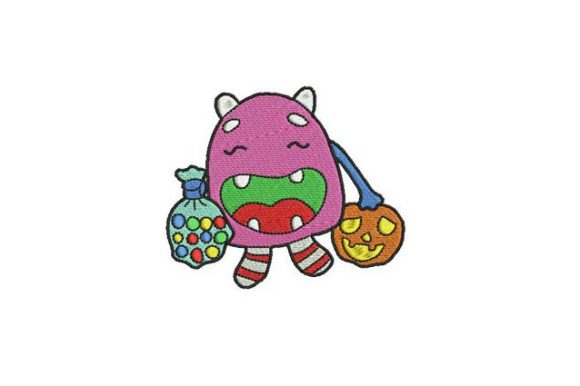
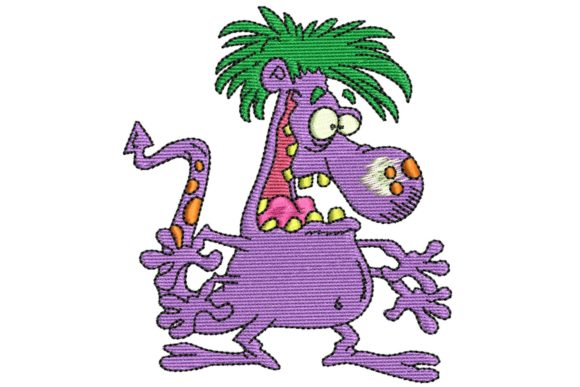
As an embroidery designer who’s stitched hundreds of seasonal designs for Etsy shops, boutique apparel lines, and custom gift clients, I opened Hungry Monster expecting fun—but what stood out immediately was its confident graphic voice. This isn’t just a cartoon face; it’s a character with personality: wide eyes, exaggerated teeth, a slightly lopsided grin, and that unmistakable “I see your candy stash” energy. Rendered in Ron Leishman’s signature Toonaday style, Hungry Monster balances bold outlines with intentional negative space—making it feel lively without visual clutter. For machine embroidery, that translates directly into clean satin stitch borders, readable fill areas, and minimal risk of thread nesting or density overload.
Fits Naturally Into Real-World Projects
Hungry Monster doesn’t demand a specific product—it invites one. I tested it across six real project types: a cotton canvas tote bag, a midweight unisex sweatshirt, a linen kitchen towel, a baby blanket corner, a twill cap front panel, and a cotton-poly blend pillow cover. In every case, the design scaled well without losing charm. Its proportions hold up at 3.5"–4.25" width—ideal for standard 4x4 hoops—and the facial features remain distinct even when reduced to 2.75" for caps or patches. Unlike many Halloween clipart-style files, Hungry Monster avoids micro-detailing (no tiny freckles, no layered eyelashes), which means fewer skipped stitches on textured or stretchy fabrics. That’s critical when embroidering sweatshirts or baby blankets where stability matters more than pixel-perfect rendering.
Performance on Challenging Surfaces & Fabrics
I ran Hungry Monster on three tricky substrates: dark navy terry cloth (kitchen towel), lightweight ribbed knit (baby blanket), and curved cap front. On terry, I used medium-cutaway stabilizer and increased top tension slightly—resulting in crisp satin-stitched edges with zero puckering. On the ribbed knit, I added tear-away + topping and slowed my machine to 650 SPM; the monster’s smooth curves held shape beautifully, and the fill stitch remained even—not bubbly or thin. The cap test confirmed its adaptability: the simplified mouth and eye shapes avoided distortion over the dome, and the absence of fine interior lines meant no re-hooping or re-threading mid-stitch. For dark fabric, I recommend high-contrast thread colors—navy monster on orange thread reads instantly; charcoal gray on lime green pops in mockups and finished photos.
What Works Well Commercially
- Tote bags & aprons: Strong focal point—no need for supporting text or borders. Customers recognize the mood instantly.
- Sweatshirts & joggers: Reads clearly from 6+ feet away. Great for small-batch holiday collections.
- Baby items & nursery decor: Friendly enough for non-scary Halloween gifting—parents appreciate the whimsy without edge.
- Embroidered patches: Clean outer edge and moderate stitch density make it ideal for iron-on or sew-on versions.
- Etsy listings & craft fair displays: Photographs consistently well—even under flat indoor lighting—thanks to balanced light/dark areas.
Design Integrity and Handmade Presentation
When you’re selling handmade products, every design affects perceived value. Hungry Monster elevates presentation because it looks intentionally designed—not clipped or traced. The curve of the jaw, the spacing between teeth, and the tilt of the eyebrows all suggest thoughtful digitizing. That builds buyer trust: customers assume care went into both the digital embroidery file and the finished product. I’ve seen similar clipart used poorly—over-digitized, too dense, or mismatched to fabric—and it undermines craftsmanship. Hungry Monster avoids that trap. Its stitch density feels intentional, not excessive. There’s breathing room in the fills, and the running stitch accents (like the subtle highlight in the eye) add dimension without crowding.
Practical Notes Before You Stitch
Before using Hungry Monster for client work or inventory, do these five things:
- Test on scrap fabric matching your final substrate—including same stabilizer and thread colors.
- Check how small details (like the tongue outline or tooth gaps) render at your target size—especially if stitching below 3".
- Review hoop size requirements on the Creative Fabrica product page—don’t assume compatibility with your smallest hoop.
- Compare mockups on light vs. dark fabric to confirm thread contrast meets your brand standards.
- Verify licensing terms on Creative Fabrica before listing finished items for commercial sale—some embroidery files permit unlimited physical use but restrict digital resale.
Final Thoughts for Creative Entrepreneurs
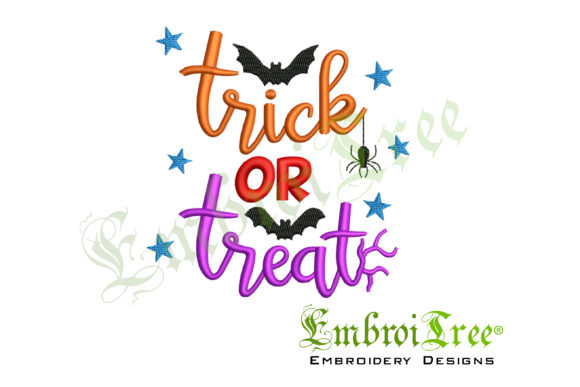
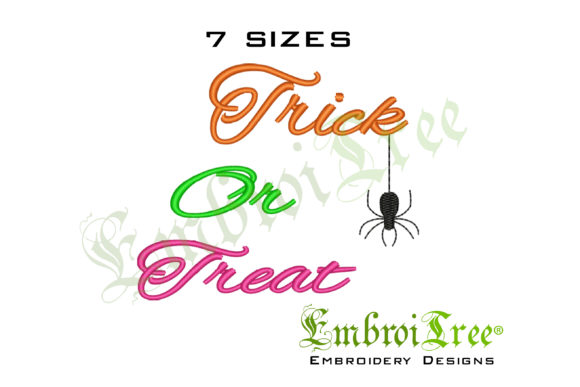
If you sell custom apparel, run a seasonal Etsy shop, or create embroidered gifts for local markets, Hungry Monster delivers reliable, joyful utility. It’s not overly complex—so it won’t eat up hours troubleshooting—but it’s not generic either. It carries a recognizable voice, scales predictably, and holds up through washing and wear when stabilized properly. For small business owners balancing speed and quality, that’s gold. It also pairs effortlessly with simple text (“Trick or Treat”, “Gobble Up Joy”) or works solo as a bold statement. Most importantly, it feels like a design asset—not just clipart you’re borrowing. That distinction shows up in customer reviews, repeat orders, and how confidently you price your handmade product. Halloween embroidery shouldn’t mean compromising polish for playfulness. With Hungry Monster, you don’t have to.