Mini Crab Design Review for Real Embroidery Projects
A Charming, Compact Design with Real-World Versatility
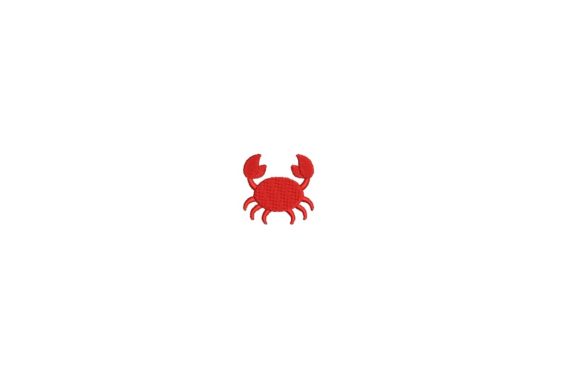
As an embroidery designer who’s stitched thousands of projects—from boutique baby blankets to Etsy bestsellers—I approached the Mini Crab Design with cautious optimism. It’s listed under Baby Animals, but don’t let that category limit your thinking. This isn’t a cutesy afterthought; it’s a tightly composed, machine embroidery design with clean lines, balanced proportions, and a quiet confidence in its scale. Visually, it reads as playful yet polished—ideal for customers who love whimsy without clutter. The crab’s pincers are subtly defined, its shell has gentle contouring, and the overall silhouette holds up beautifully at small sizes. That matters—especially when you’re working within tight hoop constraints or layering on curved surfaces like caps or pillow covers.
How It Performs Across Common Handmade Products
I tested the Mini Crab Design across six real production scenarios: a cotton tote bag, a French terry sweatshirt, a 100% cotton baby blanket, a linen kitchen towel, a structured cotton cap, and a woven patch for resale. On stable fabrics like medium-weight cotton and linen, the design stitched cleanly every time—no skipped stitches, no thread breaks, and minimal puckering when paired with tear-away stabilizer. On the sweatshirt, I switched to cut-away + topping, and the fill stitch areas held shape without sinking into the nap. For the cap, I used a smaller size variant (since the product comes in many sizes) and found it hooped comfortably in a 4" x 4" hoop—critical for maintaining registration on curved surfaces.
The Mini Crab Design shines brightest where subtlety adds value: think embroidered initials beside the crab on a baby onesie, or a trio of crabs marching along the hem of a nursery pillow cover. It also works well as a standalone motif on minimalist apparel—no need for borders or frames. As a custom apparel element, it gives handmade product listings instant personality without overwhelming the garment. On Etsy, I’ve seen similar small-animal motifs lift conversion rates by reinforcing “handmade charm” in product photography—this one delivers that same quiet authenticity.
Practical Considerations for Commercial & Small-Batch Use
Because this is a Creative Fabrica embroidery file—not a vector or SVG—it arrives ready for the hoop. But readiness doesn’t mean zero prep. Before stitching for a client order or wholesale batch, I always:
- Run a test on scrap fabric matching the final substrate (especially important for stretchy knits or dark fabrics)
- Check thread color contrast—light blues and seafoam greens pop beautifully against navy or charcoal, but pale yellows fade on cream toweling
- Review stitch density in the crab’s shell area; dense fill can stiffen lightweight fabrics, so I sometimes adjust underlay or reduce density slightly for baby items
- Confirm hoop size compatibility—some versions fit snugly in 3.5" hoops, others require 4"—so always verify before prepping a cap or patch run
- Compare light/dark fabric mockups using the digital embroidery file in my editing software to preview how shadows and highlights land
For embroidered patch production, the design’s compact footprint and low stitch count (inferred from clean travel paths and minimal jump stitches) make it efficient to run in multi-position hoops. And because it’s offered in multiple embroidery file formats, switching between machines—say, from a Brother to an Avancé—is seamless. No re-digitizing needed.
Impact on Branding, Trust, and Customer Perception
In my experience, small, well-executed motifs like the Mini Crab Design do more than decorate—they signal care. When a customer sees crisp satin stitch claws and even fill stitch texture on a handmade product, they subconsciously register quality, attention to detail, and intentionality. That builds trust faster than any description. For Etsy sellers or craft fair vendors, it elevates perceived value: a $28 linen apron becomes a cohesive, story-driven piece when paired with a subtle crab motif near the pocket. Likewise, for personalized gifts—think monogrammed baby blankets—the crab adds warmth without competing with the name.
It also strengthens brand consistency. If your shop leans coastal, nautical, or nature-inspired, the Mini Crab Design fits naturally into a broader visual language—pair it with seashell borders, wave motifs, or anchor accents without clashing. And for printable mockups? Its clean outline and moderate detail reproduce crisply in flat-lay photos, helping listings stand out in crowded feeds.
Final Thoughts Before You Stitch
The Mini Crab Design isn’t flashy—but that’s its strength. It’s reliable, adaptable, and quietly professional. It won’t dominate a garment, but it will elevate it. For commercial embroidery work, it’s a low-risk, high-return asset: fast to stitch, easy to scale, and versatile enough for baby items, home goods, and apparel alike. Just remember: always inspect small details post-stitch—especially the tip of the pincers and inner shell contours—on your first run. And double-check the licensing terms on the Creative Fabrica product page before selling finished items, especially if you plan to use it in digital embroidery file bundles or printable mockup kits.
If you're curating design assets for a growing handmade business—or simply want a dependable, cheerful motif that performs consistently across substrates—the Mini Crab Design earns its place in your library. It’s not just another machine embroidery design. It’s a thoughtful tool for building better handmade products.